Having traveled with Myo for a few days by now he seemed to peg us as the adventurous types, so instead of spending our first full day in Mandalay taking in the city sights, he proposed we hop in the car at 7am to tour Pyin Oo Lwin (formerly known as “Maymyo” or “May Town” in Colonial times – “myo” is the Burmese word for town – those of you who have read Orwell’s Burmese Days may recognize the name) and then catch a train just for one stop to experience the bridge crossing at the Gotktiek Viaduct. Always game for experiences unique to our location, we enthusiastically agreed.
Remember the really spicy Shan lunch I mentioned from the day before? Well, without getting too graphic here let’s just say all three of us (Myo included) were experiencing some after-effects, so while the day overall was great, it was somewhat tainted by upset bellies all around. Nothing a little Pepto and Immodium couldn’t remedy, and frankly having gone this long here without incident, we were feeling fortunate. Ah, travel.
The drive to Pyin Oo Lwin is 90 minutes from Mandalay, with the remainder of the trip to the train station an additoinal 90 minutes (or 34 miles). This is not 3 hours on the interstate; rather, 3 hours on paved but uneven roads shared by cars, long-haul trucks to/from China (9 hours away on this road), horse carts, ox carts, scooters, pedestrians, and the occaisional dog. I never did get a good look at the spedometer, but if I had to guess I’d say we averaged 40 mph.
The highlight of the morning was a stroll through a local market, one that clearly is NOT on the typical tourist circuit, as we were clearly the biggest spectacle going. Shouts of, “Where you from?” would be answered with, “USA,” causing the inevitable follow up of, “Obama!” and a big smile. The first US president to ever visit Myanmar, Obama is both known and generally well-liked here.
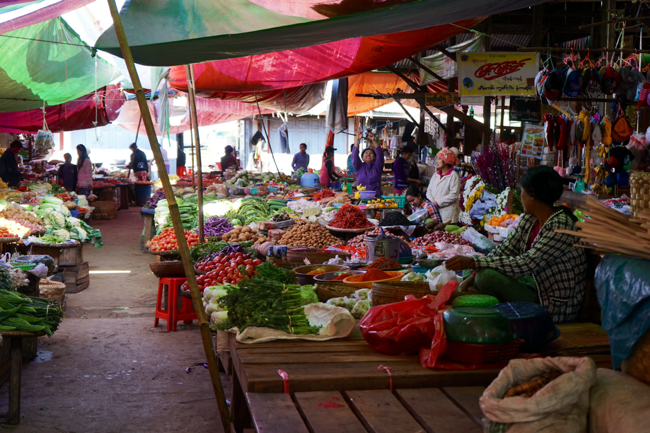
General market action
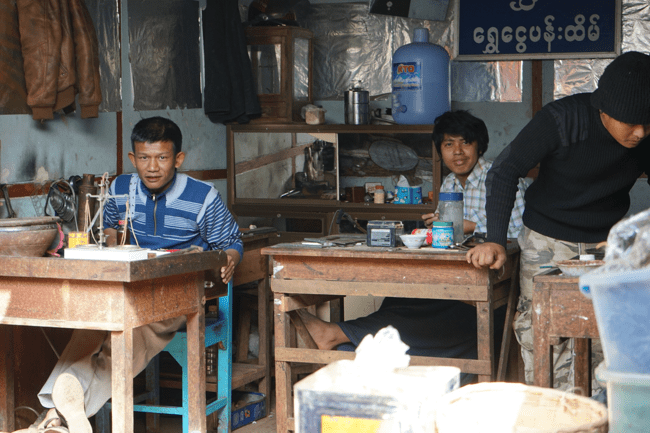
These goldsmiths looked up because as soon as I raised my camera everyone else near us in the market shouted, “She’s taking your picture!”
As it happened, we never did have a chance to tour Pyin Oo Lwin thanks to the need to get to the train station on time to catch the train across the viaduct. I’m not complaining: in order to catch this very same train in Mandalay, we would have needed to arrive at the station there at 4am.
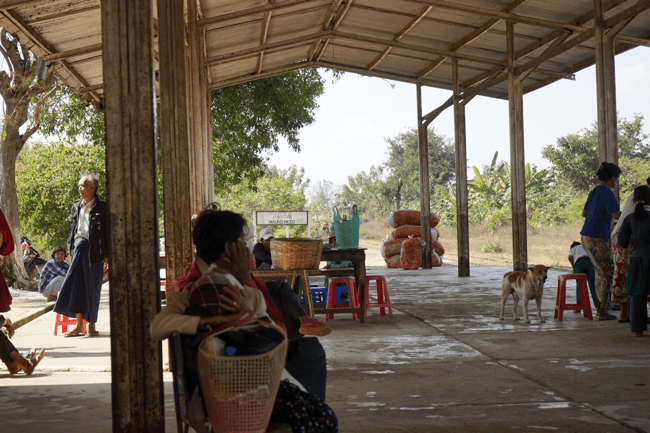
The station at Naung Hkio seems pretty typical: a small station house, a shaded waiting area, and an outhouse (visited by Josh who recommended I give it a miss if possible). Some people are passengers waiting to board; others are food vendors getting ready to feed the passengers already on the train during the short time it’s at the station. And, as in most Myanmar locations, there are dogs…
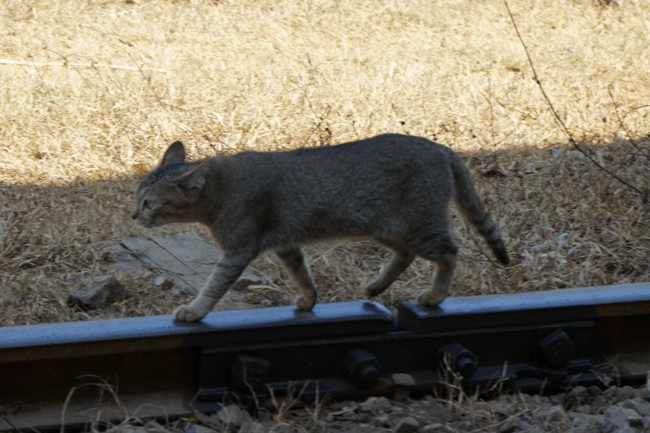
and cats.
We ended up waiting here for the train for 60-90 minutes; after having waited elewhere for late planes Myo introduced a phrase we repeated for the rest of our trip: “This is Burma.” Expats and tourists begin to joke that all of this waiting is “good for our Buddhism,” and, frankly, what else can you do but sit, wait, and take in the action around you? At least everyone isn’t staring at phone screens, escaping into the private worlds of Facebook and Gmail. Ok – that’s not totally true. Many Burmese do have smart phones and pass a lot of the time playing games on them. And rural cell coverage here puts that in the US to shame.
So why all the fuss for this train ride anyway?
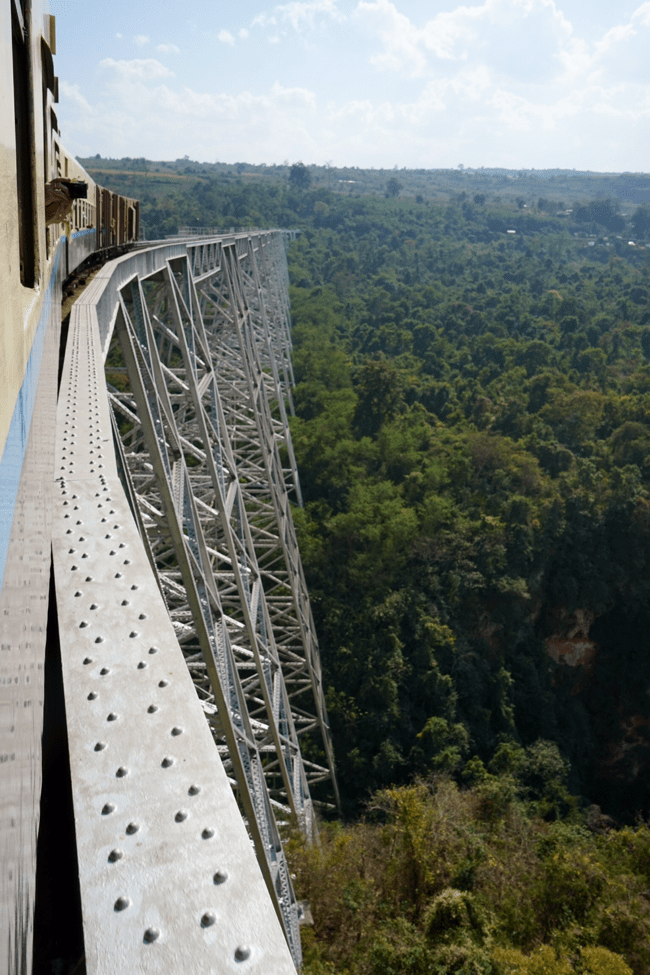
This.
When constructed in 1901 by contractors from the Pennsylvania Steel Company it was the second highest railway bridge in the world, and is today Myanmar’s longest. And, let me tell you, you are fully aware of all 318 feet between you and the bottom of the gorge as the train slowly rattles its way across. Dangerous? No doubt. Worth doing? Absolutely.
Because “this is Burma,” we had the opportunity to first wallk a good deal of this bridge when our train had to stop and wait for the one coming in the other direction to pass. Let me repeat this: it’s a one-track bridge buit in 1901, 318 feet high. We walked along it as we waited for the train to come from the other direction.
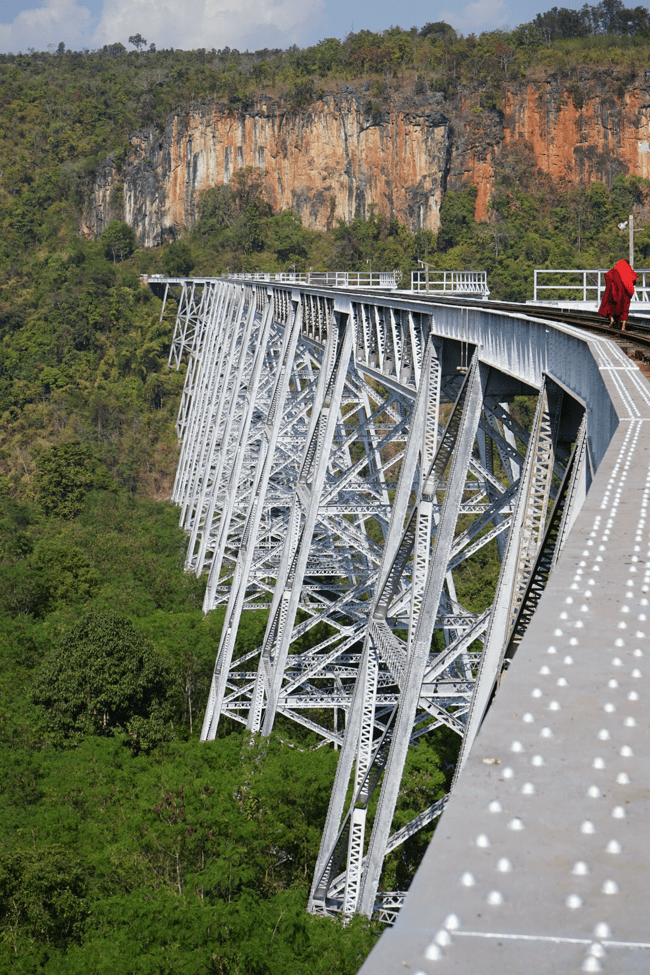
It’s safer to do this if monks are ahead of you.
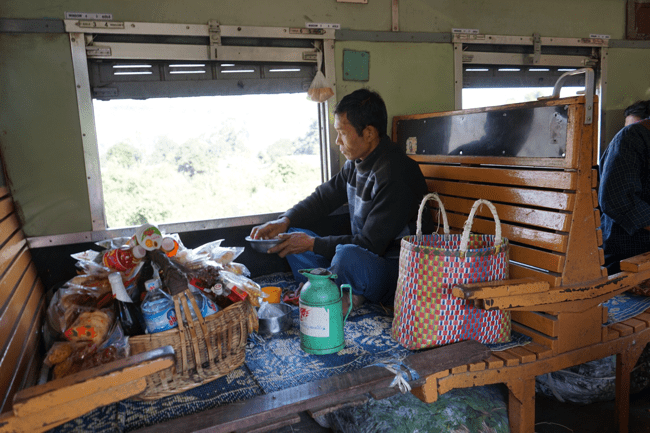
We sat across from this man during our 45 minutes actually on the train; Myo talked with him a bunch and learned that he is employed by the railway. His main job is as a member of a 6-man team who ride so that they can be on call to lever the train back on the tracks in the event of a derailment. Having been on a few trains in South America, I was not terribly alarmed by this knowledge; not that I’d want to be in a derailment (especially on the bridge), but they never really seem to travel fast enough for one to be totally catastrophic. When not called to put the train back on the tracks, he manages the car and makes a little money on the side to trasport produce for famers (you can see one bag peeking out from under his seat – the whole car was full of these). He’s happy to provide this service as the salary he earns from the railway amounts to about US$4 per round-trip.
By the time we disembarked at the next station on the other side of the bridge it was 3:00pm and we had 3.5-4 hours driving to get back to Mandalay. Needless to say, when we did we went straight to our hotel room, showered, and happily ordered up room service club sandwiches. I was asleep by 8:30.
 A Month in Myanmar