After spending the morning visiting the market and stupas in In Dein, we spent the rest of the day getting a little taste of how villagers on the lake make a living via handicrafts and farming. I’m a huge sucker for handmade goods, especially those that (thanks to the cost of doing international business or, in the case of Myanmar, a trade embargo) are impossible to buy at home. So I was especially looking forward to this. It goes without saying that all of these processes are terribly labor-intensive, and almost no modern mechanization is in evidence. I will say, however, that each one of these workshops is a bustling business, with shelves stocked full of their goods to sell to all the tourists who visit. To our surprise (as we were told that Myanmar is a no credit card country) most of them now accept Visa and MasterCard.
We visited a sliversmith, where we saw people making jewelry, baskets woven out of threads of silver, and ornate bowls and mini stupas.

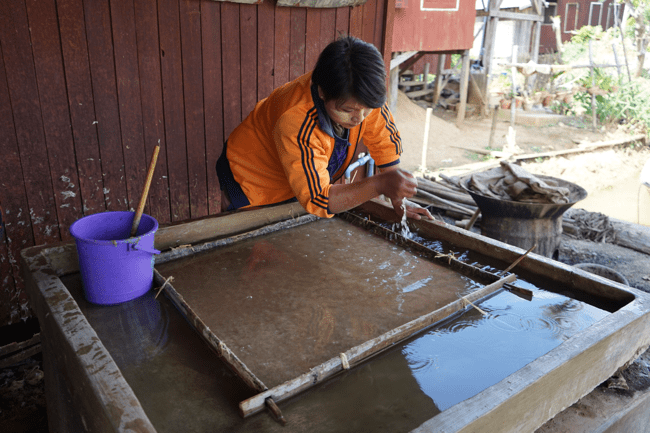
We also visited a paper-making workshop, where women turn tree bark into paper by mashing the pulp, mixing it with water, then drying it for a couple of hours.
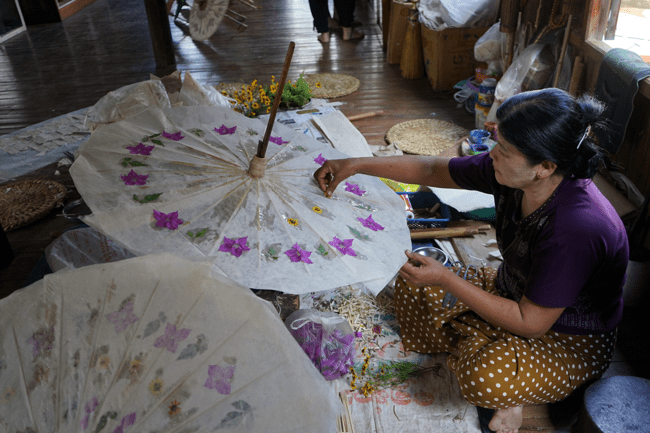
Inside the workshop, they use the paper adorned with dried flowers to make really beautiful parasols.
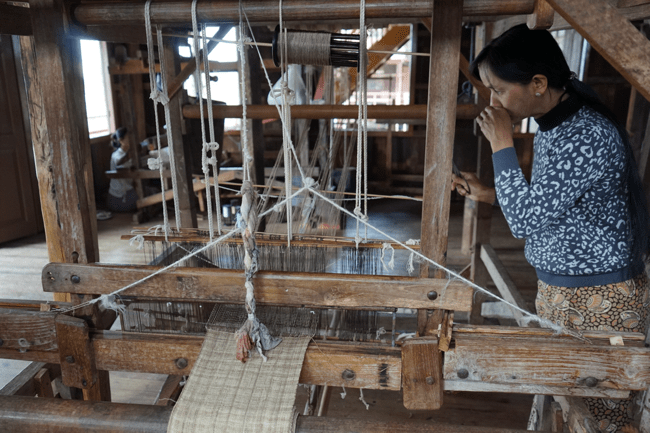
Our final workshop visit was to a fairly extensive weaving operation, where the only (according to Myo) lotus thread products are still made. Making the thread is laborious and time-consuming, as the lotus fiber is thin straight from the stalk.
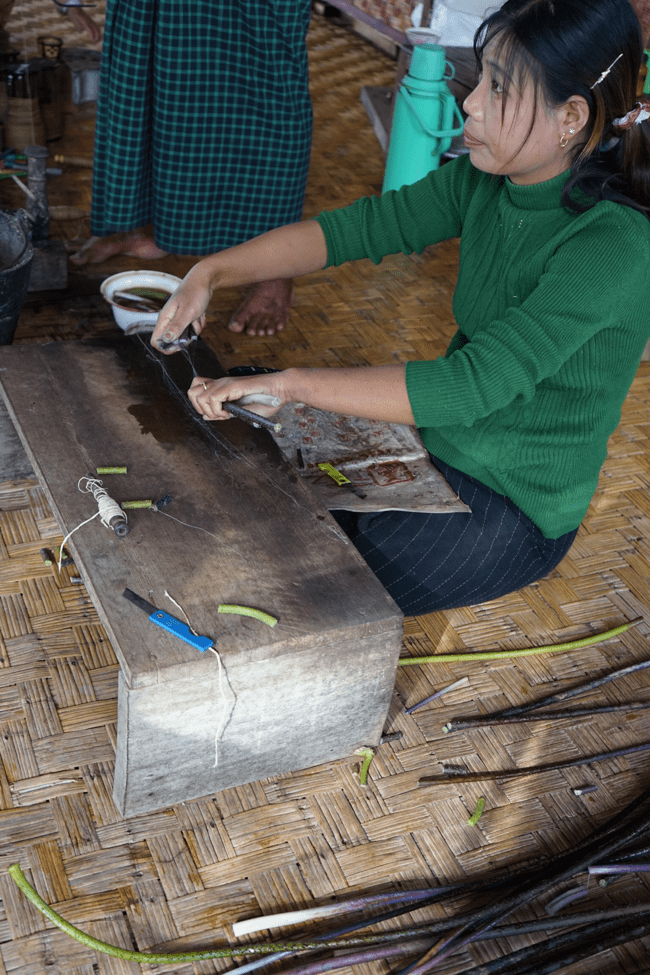
The workshop creates fabrics from lotus, cotton, and silk, with the lotus being the most rare and expensive (up to US$200 for a scarf — this in a country where the average monthly income is US$120).
And yes, like good tourists we walked away from each workshop with a souvenir (or two… or three…).
After a really lovely stroll through a small village we ended our day by motoring by some of the floating farms. What amazed us most was how BIG these farms are; we’re not talking just a small family plot here. These tomatoes, for example, are grown for export to China (which is where a lot of the commercial agriculture here goes. As Myo says, “China eats everything.” It goes without saying that the relationship between Myanmar and China is complicated).
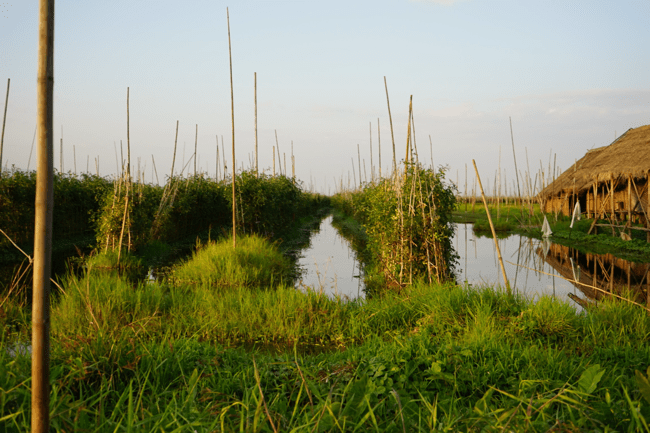
Farmers essentially create new land by first gathering rows of water hyacinth, which trap air and create a base floating layer. On top goes a layer of “water weeds,” followed by soil. Certain crops such as tomatoes and flowers, seem to do especially well here. This is the good news. The bad news is that these farms are productive for 4-5 years only, and then they are abandoned. There is a growing concern about how much of the lake these farms are beginning to overtake.
 A Month in Myanmar